Let’s have a look at some incidents that took place in recent times across India:
- Karnataka: A 22-year old man died after injuring his spinal cord while doing a backflip for TikTok.
- Rajasthan: A 12-year-old boy hanged himself after wearing a ‘mangalsutra’ and bangles (apparently, they were part of the rules of a challenge).
- Maharashtra: – A teenager from Maharashtra was killed while posing with a pistol for a video clip.
- Tamil Nadu: A 24-year-old man jumped in front of a train and committed suicide after being bullied and ridiculed by strangers over social media for dressing up in womanly attire.
And the list goes on. A common theme across the above incidents is TikTok, a mobile app. It appears that this virtual world has become a death valley of sorts for youngsters. As a result, there has been a clamour from many quarters for flattening out this valley. TikTok has become a sort of playground for ‘Youngistan’ providing Oxygen to their aspirations and desires, which often get mowed down by the traditionalism of small towns and villages. So, is the plea to ban it justified? Can it be banned in public interest and, if not, what is the “madhyam maarg” (the middle ground) to get out of this social media “crisis”?
Many see it as a symbol of cultural degradation and asseverate that it is encouraging the spread of explicit content on the digital platform. There is also this prevailing fear that TikTok could expose vulnerable children to sexual predators. One way of doing it is TikTok’s “duets” feature, which has been exploited by sexual predators; by performing suggestive duets with underage girls. Thus, social media has provided a new platform for easily accessible sexually explicit content, which is resulting in rapidly changing social behaviour and redefining morality, especially amongst the younger generation. Apart from that, it also buoys up body shaming and cyber-bullying (through dismissive and sarcastic reactions, posting rumours, pejorative labels, impersonation etc) which causes depression and anxiety and leads to lowering of self-esteem and increased suicidal ideation.
To Ban Or Not To Ban?
So, the consequential dilemma arises as to whether it should be banned or not? Madras High Court had also imposed an interim ban. Many parents believe that the effects of screen-based activities and risks associated with social media are serious enough to forbid it outright. However, if you ban social media, your kid might be more inveigled to check it out when he’s away from home (where you can’t restrict or monitor the internet access/traffic).
Also, with the new apps coming regularly in the digital market, kids will never stop transposing to these new apps that are foreign to their parents. Banning social media just isn’t realistic and is not a good way of teaching kids how to vanquish social media risks. Any “arbitrary” ban on social media platforms and intermediaries also has economic consequences. It could impede foreign direct investment and affect the expansion of the Digital India initiative. The same was opined by an industrial body related to the internet and mobile devices. As far as the content (user-generated) moderation (to curb the spread of inappropriate content) is concerned, these platforms have taken effective measures in recent months to curb the excesses and are continuously striving to curb the violation of their policies on community guidelines.
How Does It Affect Households?
We can’t completely restrict the younger generation’s access to platforms like TikTok, as far as inappropriate content is concerned:
- Users can contact anyone in the world due to the public nature of the platform.
- Although they can block or report others for inappropriate messages, TikTok has no broader parental controls (i.e. from developers’ point of view).
- Even if they set their own account to private, they may still be exposed to sexual or violent content posted to the public feed.
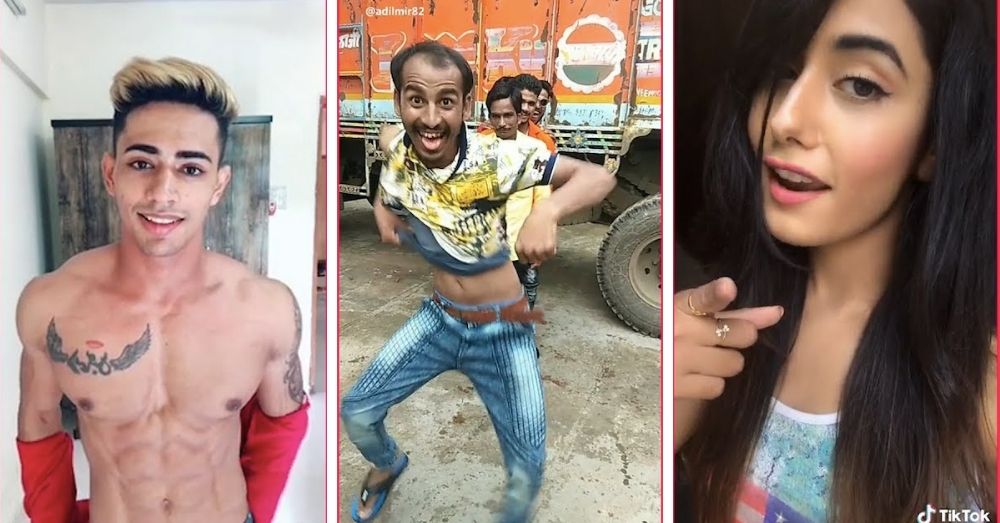
When someone’s video gets appreciated on the platform, he/she starts aggressively uploading videos on a daily basis. In due course of time, they stop the real-life conversations and dive deep into the virtual world. It might also affect their academic and outdoor activities. Many kids create multiple accounts for fear of being detected by their parents. If parents leave the vulnerable kids at risk of cyber-bullying and online shaming, it also shows parents’ ignorance, as adults, about understanding what vulnerabilities their kids are exposed to. As digital parents, they must be aware of cyber trolls and the emotional havoc they can cause. Also, most often cyber-bullying goes unnoticed because the kids hide it from their parents or from anyone who can help to prevent the bullying from occurring and from getting worse. Although they slowly change their behaviours and actions and become more socially inhibited and quiet, it goes unnoticed since the change is subtle.
How Can Parents Combat It?
Talking about social media use and tracking their digital footprint is the best way to protect kids. Parents should always monitor their kids’ accounts and speak to them regularly about what they do or read on the digital space. For example, as TikTok continues to face criticism for inappropriate content, it is increasing the quantity of educational content (many other social media platforms are also doing the same). For example, motivational speakers and tuition teachers are creating videos and giving lessons through #EduTok. Parents can guide them to these feeds rather than keeping them completely out of touch with these platforms.
We need to have an insight into the real issue that this problem of inappropriate content is not kept within the bounds of TikTok only. On several other live streaming and short video apps platforms, such sexually explicit content is hosted and is within the reach of any Indian who has a smartphone. We can’t ban all of them, especially when social media is being increasingly embedded in apps, games and website. Hence, rather than resorting to a knee-jerk solution, what we need is to put in place a technological and data-analytical system that can identify the percentage of exposure to explicit content. In the case of non-adherence, these posts must be taken down and the accounts suspended. There should also be proper implementation and compliance of existing legal norms like conducting annual IT audits and ensuring no such content is hosted on servers. However, this technical solution is not a permanent one and we need to look at it as a social and psychological issue, which we will see at the end of this article.
Let’s Really Understand The #TikTok Culture
Now, let’s come to the TikTok culture which has engulfed the mind of Indian youth. Creative apps can also be misused and that’s what is happening with TikTok. It can be fun for everyone if it’s used in the right spirit. It provides a platform to capture and share moments putting to use unique and interesting special effects. It provides users with a window to discover their talent and showcase it on the digital platform where the feedback is instant and often prolific.
Social media platforms such as Facebook and Instagram primarily have an upper-class user base (as far as engagement and drawing attention to one’s talent is concerned). In contrast to this, TikTok has captured the psyche of Indian youth and has tapped into a credence about their lives, calibre and their humble backgrounds (especially in non-Tier-1 cities), which has been attested by its skyrocketing number on download charts. Although TikTok videos lack the glitter and virtuosity of professional shoots, they embody a certain rawness, characteristic of the place (geographical and societal) they belong to. Most of these users belong to the lower strata of the society and thus, these videos also offer an insight into our own countryside.
Does TikTok Appeal To Women Because It Gives Them ‘Freedom’?
Coming to women, has the TikTok storm touched their world too? The data says so. 75% of the active TikTok users in India are women. We need to look at this new socio-cultural episode from a different angle and thus, can decry this new insight. By venturing beyond the boundaries of their homes into the digital social space of TikTok, they sense a kind of liberation which is also giving them a new avenue to showcase and explore their hobbies which were earlier camouflaged by the prevailing socio-cultural milieu. Many of them turned into social media stars overnight (this list also includes women from small cities who don’t belong to upper strata of the society).
Often the initial reactions on seeing their videos are that of mockery or the absurd assumption that they have gone frenzied due to their sudden access to digital world. But having a closer look, we can see a yearning to implode the glass ceiling thwarting them and also the feeling of disquiet about what lies beyond (Bodyshaming? /Cyberbullying? /Cyberstalking? /Online-Offline threats?). Also, this platform does not have the differential parameters (including beauty) to judge their work. For example, how many transgender women or dark-skinned women (except few like Bipasha Basu, Nandita Das etc) do we know from the mainstream celebrity realm? Irrespective of their skin colour, sex and social status, such women are making themselves visible to the world through TikTok platform and carving out space as a performer.
Tiktok Gaining Popularity Has A Lot To Do With Our Socialisation Needs
The TikTok culture is not always about the cyber-bullying, pornography etc; it is also, in some way, giving expression to youth/ women empowerment. Let us discuss the issue of “social media’ in general and let us face some harsh realities:
- A social ‘Connect’ or ‘Disconnect’: Although social media provides users with a means to connect or reconnect with the networks of online friends and group memberships; to some extent, it does exemplify the very opposite (‘disconnect’). We are continuously striving to recreate a fabricated and highly-elaborate digital identity, intimacy and sociability; instead of constructing an identity lived through authentic relationships in real life (in a way dismantling the non-digital space).
- Reverse socialisation over short timescales: We are spending a significant proportion of our daily life on social media, some of with an aim to maintain friendships and others constantly look for validation and acknowledgement on these platforms (a sort of reverse socialisation). The high-speed reciprocity occurring on the digital space (like comments, shares and responses to them) leads to a stage of social anxiety where we wish to stay continually connected with others’ social media activities.
- ‘Societal Acceptance’ Vs ‘Digital Acceptance’: When people are not accepted or are criticised/ ridiculed because of their digital presence/ activities, they feel emotional agony. For example, a 24-year-old man in Chennai jumped before a train and committed suicide after being bullied and ridiculed over social media for “dressing up in womanly attire”.
It also happens when people compare themselves with their peers on social media, they fail to comprehend that the world of social media is a utopian one where users present themselves in a certain way portraying only positive aspects of their life. At this juncture, we start seeking approval and compare ourselves with other social media users and start questioning why our own lives are not as exciting or fulfilling. We start regretting that our life is not exciting enough to put online. We start valuing ourselves on the basis of friends lists, post likes, and followers, shares, comments etc. and we get hungry for appreciation from this virtual/digital world and strive for maximum numbers. And when we don’t get these desired numbers (or the perceived digital success), feelings of loneliness and depression arise. It eventually leads to the lowering of our self-esteem which gets reflected in real-world interactions outside the digital social space.
At this point, I remember Einstein’s quote, “I fear the day when technology will suppress human interaction and the world will have a generation of idiots”.
Every human invention has its own positive and negative side to it. Whether social media is good or bad depends upon how we utilise the digital space and how much information we share. Excessive use of social media becomes a dependency where we seek compulsive engagement and cross the line into a sort of digital addiction.
Socialisation is important, but we should not confuse social media communication with authentic social communication in real-life situations. We must keep in mind that although such platforms can provide us with a wide friendship network, sometimes, they lack the depth of real-life relationships and provoke a false sense of connection. This approach calls for a lot of self-discipline where we must see digital communication just like a logical extension of traditional communication methods and not as an end in itself.
Comments
Post a Comment