The phrase ‘Unity in diversity’ relates to the idea of togetherness or integrity, despite the presence of infinite diversity in terms of religions, castes, languages etc. And from that perspective, there is no country in the world like India, which stands united under one flag by imbibing the culture of brotherhood. Apart from this one “socio-cultural identity” of being an Indian, we also have one ‘sacrosanct Constitution, which came into effect on January 26, 1950, and gave us one “legal identity”.
This day is celebrated with great pomp and show around the country and it cements our pride that we live in a country that has such a diverse glorious history and rich heritage. But, does every Indian share that pride? This article is all about answering this practical question (through the lens of flag hoisting ceremony).
The Indian Independence movement not only paved the way for the ousting of the British and colonialism, but also marked the beginning of an end of “untouchable” India. Consequently, India legally banned discrimination based on caste, when it enacted the Untouchability Offenses Act in 1955, but a casteist mindset and deeply rooted social biases still make it difficult for marginalised sections of our society, such as Dalits, to have their voices heard. This gets manifested in various forms. For an example, I can remember two incidents from last year, one that occurred on Republic Day and another on Independence Day. And these incidents are testimony to the fact that we as a nation in the 21st century have still not come out of our casteist outlook.
In 2020, Amurtham, president of a village in the state of Tamil Nadu, was not allowed to hoist the Indian flag when the whole of India was celebrating the Independence Day. Earlier in the same year on Republic Day, the principal of a government school in Rajasthan was threatened for unfurling the national flag and casteist slurs were hurled at him. When the president of the same village hoisted the national flag in the presence of government officials, these were her exact words,
“I breathed freedom for the first time today. I was duly elected as the [village] president by the people, but I was prevented from hoisting the national flag. Today, I feel proud, happy and relieved.” These words duly attest the idea of the Bihar government that I will talk about.
But before that, it is that time of the year again (January 26, 2021). The time when as a kid, I used to wave around on the streets and march towards my school/Kutchery Maidan to watch flag hoisting and passing of the jhankis, while echoes of Jana Gana Mana and Vande Mataram were continuously transmitted throughout the city. The 52-second chant of the national anthem used to bring down a chill in everyone’s spine.
Definitely, hoisting the national flag is something that will fill every Indian heart with pride and since my childhood, I, too, have dreamt of hoisting our national flag. I also thought (as a kid) that only the lucky ones get the chance to hoist the flag on the memorable occasion of Independence Day or Republic Day. And perhaps, one section of the Bihar society, the Mahadalits (although I realised this not as a kid but as a well-matured one) also believed that hoisting the flag is only a prerogative of the few lucky ones.
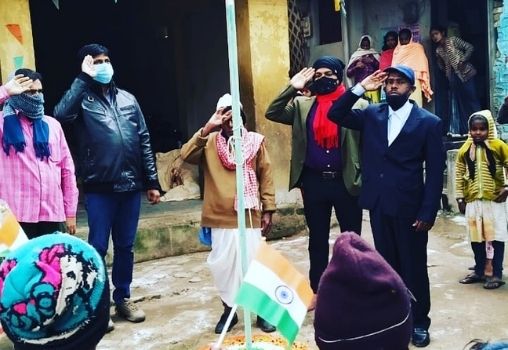
This year, being Senior Deputy Collector under the Government of Bihar, I was supposed to attend and facilitate the flag hoisting ceremony in a Mahadalit tola in Nalanda District and it was a flag hoisting with a difference. I could sense the feeling of happiness and pride in many eyes and perhaps, they were eagerly waiting for me to come. Having someone from the district administration among them to share this special day, they were trying to say that they, too, were among those lucky ones now (For some readers, this might seem like a feudalistic statement, but it does really matter, especially when many a times, the administration itself is accused of acting against the rights of Dalits).
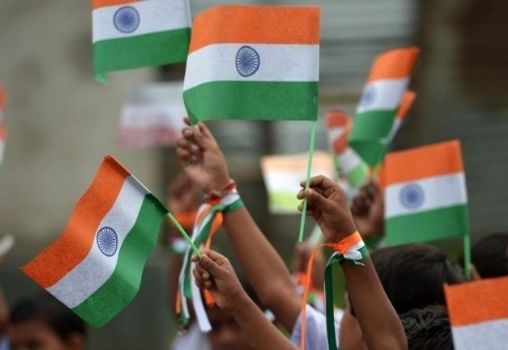
A few years ago, it was decided by the government of Bihar that Independence and Republic Day functions would be organised in all Mahadalit “tolas”. It was an emphatically radical public assertion by Honourable CM Nitish Kumar to make it a practice to have a person from a marginalised community hoist the Indian flag. For many among Mahadalits, it was a historic decision by the state government.
Earlier, their children used to visit other neighbourhoods, away from their own settlements (tolas), to witness the flag-hosting ceremony, either standing outside a school or a government office. But now, they would be a part of the national days in their own settlement. Such a thing had never happened in their tola.
Obviously, it could be termed as a “simple and empty symbolism”, when nothing else was being done for the Mahadalits. However, that is not the case. Many dedicated schemes are being implemented through the “historic policy document” — including the Bihar Mahadalit Vikas Mission (BMVM) (Kaushal Vikas Yojana, community toilets, Poshak Yojana, Shauchalaya Nirman Yojana, Awasiya Vidyalaya, Awas Bhumi Yojana, Jalapurti Yojana etc. along with Nischay-1 and Nischay-2).
Through this affirmative action, the BMVM envisions to fulfil the basic necessities of this section of society through socio-economic-cultural empowerment and ensure their full participation in the mainstream of development. On an emotional/cultural note, doesn’t an event like hoisting the national flag by someone among them in their own tola, in the presence of government officials, give them a sense of being part of the mainstream society, and not disconnected from it?
Definitely such festivities are a step forward towards bringing the government to the common man’s door. The event also serves as an awareness program where government officials tell them about the benefits of the ongoing social welfare schemes of the government and the way they can avail them. In my opinion, such events offer self-respect to the people who are historically discriminated and the disempowered. And in this way, it is a genuine gesture of great humility and acknowledgement of human worth by government.
While preparation of Civil Services Examination or during training after getting selected as civil servants, it was repeatedly edified to us that civil servants must be empathetic towards weaker sections of society while discharging their duties. Events like this surely serve to evoke such empathy and impels our actions and thought processes to get aligned in the direction of service of these people. Along with that, it is nothing short of a blessing to share the joy of the community.
Happy Republic Day to all!
Comments
Post a Comment